Building Safety Act 2022: Scope, Rules & Exclusions
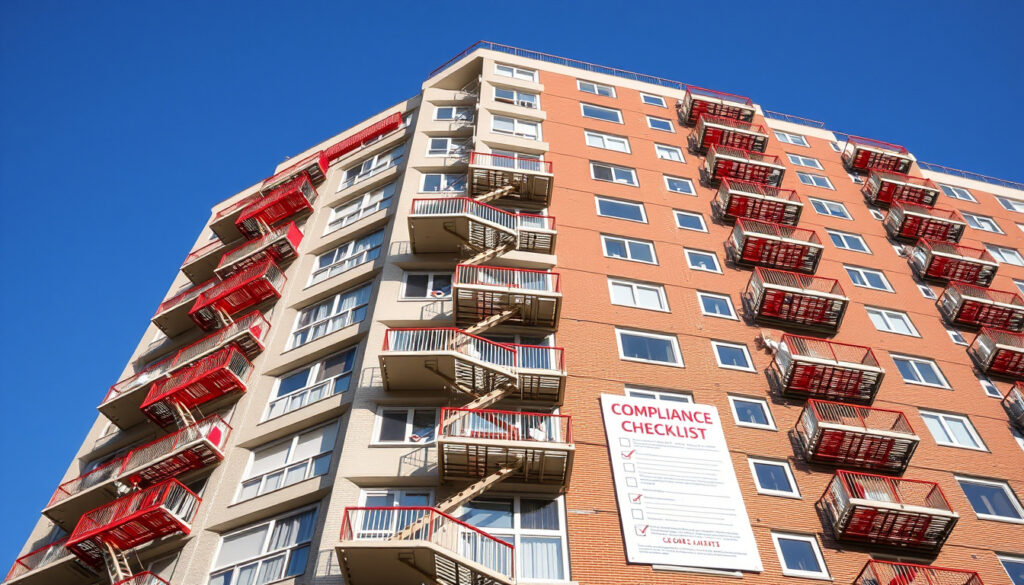
If you live in a flat built in the last few decades, there’s a good chance the Building Safety Act 2022 affects you directly. The legislation arrived in response to the Grenfell Tower fire, and it reshaped how certain buildings are regulated in England. But the rules don’t apply uniformly to every structure, and figuring out where your building fits can feel like decoding a legal Rubik’s cube. This guide cuts through that complexity by laying out exactly what the Act covers, what it excludes, and why the distinction matters for residents and property owners alike.
Royal Assent Date: 28 October 2023 · Current Status: Up to date as of 30 April 2026 · Primary Regulator: Building Safety Regulator · Key Focus Areas: Fire safety, cladding remediation, building standards
Quick snapshot
- Royal Assent on 28 April 2022 (Legislation.gov.uk)
- Higher-risk buildings must be at least 18m tall or 7 storeys with 2+ residential units (GOV.UK Guidance)
- Building Safety Regulator became Building Control Authority on 1 October 2023 (Construction Leadership Council)
- Final outcomes of the Grenfell Phase 2 review expected summer 2025 (Ashfords LLP)
- Whether roof gardens count as storeys remains under consultation (Building Safety Hub)
- 2023 regulations expanded scope to include hospitals and care homes during construction (Legislation.gov.uk)
- Government reviewing definition of higher-risk buildings following Grenfell Phase 2 report (Ashfords LLP)
- Potential expansion to hotels, military premises, and other building types under review (Property Inspect)
- New vulnerability assessment framework anticipated with summer 2025 proposals (Ashfords LLP)
The table below summarises the key facts about the Building Safety Act 2022, drawing from official legislation and regulatory guidance.
| Aspect | Detail |
|---|---|
| Enactment | 28 October 2023 |
| Primary Regulator | Building Safety Regulator |
| Main Goals | Improve safety standards post-Grenfell |
| Higher-risk building height | 18 metres or 7+ storeys |
| Minimum residential units | 2 or more |
| Geographic scope | England only |
| Key SI number | No. 275 (2023 Regulations) |
| Leaseholder protections in force | 28 June 2022 |
What is not covered by the Building Safety Act?
The Building Safety Act 2022 draws a firm line around its scope. It doesn’t regulate every structure in England—far from it. Understanding what falls outside the Act’s reach is just as important as knowing what it covers.
Exempt building types
Entire buildings used for specific purposes are excluded from the higher-risk regime during the occupation phase. According to official GOV.UK guidance, hospitals, care homes, secure residential institutions, hotels, and military barracks are not subject to the Act’s occupation phase requirements. A hospital is defined as a building for receiving, treating, or accommodating ill individuals—including those for convalescent or maternity care with overnight stays. GP surgeries without overnight patient facilities are explicitly excluded from this definition.
Secure residential institutions cover prisons, young offenders’ institutions, and detention centres. Hotels and hostels providing overnight accommodation for leisure or business purposes are excluded if the entire building serves that function. Military barracks and Ministry of Defence living accommodation also fall outside the regime.
Low-risk structures
Buildings below the higher-risk threshold represent the bulk of structures that fall outside the Act’s primary requirements. Shorter residential blocks, office buildings, and standalone houses don’t trigger the registration, safety case, or Accountable Person obligations that apply to qualifying higher-risk buildings.
If your building doesn’t meet the height and occupancy thresholds, the Act’s occupation phase regime doesn’t apply—but other building regulations still do. The distinction determines which safety obligations your property manager must fulfil.
Does the Building Safety Act apply to all buildings?
No. The Act’s higher-risk building regime targets a specific subset of structures. Not every building in England falls under its purview, and the criteria are precise.
Higher-risk building definition
A building qualifies as higher-risk during occupation if it meets two cumulative conditions. First, it must be at least 18 metres in height measured from ground floor to the top storey, or have at least 7 storeys. Second, it must contain at least 2 residential units. These criteria come directly from official GOV.UK guidance and are verified across multiple legal sources.
Height measurement has specific rules: basements are disregarded, and the top storey doesn’t count if it houses exclusively plant and machinery. Mixed-use buildings containing at least 2 residential units that meet the height or storey threshold are classified as higher-risk. University accommodation and school boarding houses with qualifying residential units also fall within scope.
Height and occupancy thresholds
The RICS guidance clarifies that buildings up to 11 metres or 5 storeys fall outside the Part 4 and Part 5 requirements, as well as Schedule 8 of the Act. This creates a clear demarcation: structures below approximately 11 metres face different regulatory treatment compared to those meeting the higher-risk threshold.
What is the latest version of the Building Safety Act?
The Building Safety Act received Royal Assent on 28 April 2022, establishing the foundational legislation. However, the framework has evolved through subsequent statutory instruments.
Updates and amendments
The Higher-Risk Buildings (Descriptions and Supplementary Provisions) Regulations 2023, made as Statutory Instrument No. 275, expanded the Act’s scope in one significant way. These regulations extended coverage to include hospitals and care homes during the construction phase—though notably, existing hospitals and care homes remain excluded from the occupation phase regime.
On 1 October 2023, the Building (Higher-Risk Buildings Procedures) (England) Regulations 2023 came into force, establishing the procedural framework for higher-risk building control. This same date saw the Building Safety Regulator assume its role as the Building Control Authority for higher-risk buildings.
Current status as of 2026
The framework remains up to date as of 30 April 2026, with no major legislative overhaul occurring in 2024. The government has initiated a review of the higher-risk building definition following the Grenfell Tower Inquiry Phase 2 Report, with plans for proposals in summer 2025 that may consider additional vulnerability factors.
“In light of the Grenfell Tower Inquiry Phase 2 Report recommendation, the government has undertaken an initial review of the definition of higher-risk building.”
— Ashfords LLP (Legal Analysis)
What is the 11 Metre rule?
The 11-metre rule refers to a threshold tied to permitted development and building regulation distinctions, not a standalone provision within the Building Safety Act itself. It signals an important boundary in the regulatory landscape.
Context in building regulations
Under planning permitted development rights, single-storey extensions and outbuildings below certain heights don’t require full planning permission. The 11-metre figure also appears in discussions of “relevant buildings”—those between the lower thresholds and higher-risk thresholds—where transitional regulatory treatment applies. According to Ashfords LLP, buildings at 11 metres or 5 storeys mark a demarcation point in the regulatory framework.
Application to safety standards
Buildings approaching the 11-metre mark may trigger requirements under the broader building regulations framework even if they don’t qualify as higher-risk under the Act. This zone includes structures that require building control approval but fall short of the enhanced safety case regime reserved for buildings exceeding 18 metres or 7 storeys.
Properties in the 11–18 metre range aren’t covered by the higher-risk occupation regime, but they still face building control requirements. If you’re buying or managing a mid-rise block, don’t assume the Act is irrelevant—it may apply partially.
What is the 2.5 Metre rule?
The 2.5-metre rule relates to permitted development exemptions for garden rooms, outbuildings, and similar structures. It’s a planning concept that exists somewhat separately from the Building Safety Act, though understanding the interaction matters for property owners.
Garden room and outbuilding limits
Under current permitted development rights, single-storey outbuildings, garages, and garden rooms can be constructed without planning permission if they remain under 2.5 metres in height (measured to the eaves) and comply with other conditions, such as not exceeding 50% of the original garden area. This 2.5-metre threshold is a planning de minimis provision—it represents work considered unlikely to significantly impact neighbours or the environment.
Permitted development exemptions
Structures built within these limits don’t require building regulations approval for the work itself, though they may still need to comply with other requirements depending on their use and location. The RICS guidance notes that very small structures fall outside the Act’s primary framework, creating a tiered system where larger additions and alterations trigger progressively more stringent oversight.
Homeowners building modest garden rooms benefit from permitted development freedoms—but those freedoms mean less regulatory scrutiny. If you’re constructing near a higher-risk building, consult your Accountable Person to understand whether boundary works affect shared safety systems.
Related reading: Houses for sale in the UK · UK government regulations
Frequently asked questions
Can you opt out of BCAR?
Building Control Approval Requirement (BCAR) applies to certain works on higher-risk buildings. The Building (Higher-Risk Buildings Procedures) Regulations 2023 establish when BCAR is mandatory. If your building qualifies as higher-risk and your proposed works fall within regulated categories, you cannot opt out—the requirement is statutory rather than discretionary.
Is BCAR required?
BCAR is required for construction work on higher-risk buildings where the work falls within the scope of the 2023 Regulations. The Building Safety Regulator acts as the Building Control Authority for these determinations. Work on buildings below the higher-risk threshold generally follows standard building control procedures.
How tall does a house need to be for 2 stories?
A typical two-storey house in the UK ranges from approximately 4.5 to 7 metres tall, depending on ceiling heights and roof configuration. This falls well below the 11-metre threshold and doesn’t approach the 18-metre higher-risk building criterion. Two-storey houses are generally outside the Act’s scope unless they’re part of a larger building containing at least 2 residential units that meets the height or storey threshold.
What is Building Safety Act Frequently Asked Questions – RICS?
The RICS FAQ document provides industry guidance on common questions about the Act’s application, including phase distinctions between occupation and construction, leaseholder protections, and the relationship between the Act and other building regulations.
What changes in Building Safety Act 2024?
No major legislative changes to the Building Safety Act occurred in 2024. The most significant recent development is the government’s announced review of the higher-risk building definition following the Grenfell Phase 2 report, with proposals anticipated in summer 2025. The existing statutory framework from 2022 and 2023 remains in force.
What is Building Regulations Act 2010 relation?
The Building Regulations Act 2010 establishes the baseline framework for building control in England. The Building Safety Act 2022 operates alongside, rather than replacing, these regulations—it adds enhanced requirements for higher-risk buildings while existing building regulations continue to apply to all structures.
Who enforces the Building Safety Act?
The Building Safety Regulator enforces the Act’s requirements for higher-risk buildings in England, having assumed its Building Control Authority function on 1 October 2023. Local authorities and other enforcement bodies retain responsibilities for buildings outside the higher-risk regime.
Key responsibilities under the Act
Beyond understanding scope, property owners and managers need to grasp the obligations that attach once a building qualifies as higher-risk.
The Accountable Person—which may be the freeholder, Resident Management Company, or another entity—must register the building with the Building Safety Regulator, conduct regular safety assessments, maintain a safety case documenting risks and mitigations, and engage meaningfully with residents. These aren’t optional good-practice measures; they’re legal duties under the Act.
Duty-holders during the construction phase include developers, contractors, investors, and managers with competencies beyond those required under the Construction (Design and Management) Regulations 2015. The Act requires recording of materials and methods, with a final review required before occupation approval can be granted.
“Higher-risk buildings are subject to the requirements of the new higher-risk regime directly overseen by the Building Safety Regulator.”
— GOV.UK Guidance (Official Government Guidance)
For residents, the Act introduced the homeowner protections provisions, which came into force on 28 June 2022. These limit the costs leaseholders can be charged for cladding remediation and set caps on service charges for relevant works.
Leaseholders in affected buildings gained statutory protections against unlimited remediation costs—but those protections apply only to qualifying buildings and qualifying costs. If you’re disputing charges with your landlord, check whether your building meets the thresholds and whether your works fall within the protected categories.
Summary
The Building Safety Act 2022 introduced the most significant reforms to building regulation in decades, but its reach is deliberately targeted. Only buildings meeting the 18-metre or 7-storey threshold with at least 2 residential units fall under the higher-risk occupation regime. Entire building categories—hospitals, care homes, hotels, and military accommodation—sit outside this scope, though some entered the construction phase framework in 2023. For residents of mid-rise blocks and smaller structures, the Act doesn’t directly apply, but building regulations and other protections still exist. For those managing or owning flats in taller blocks, the Accountable Person obligations and leaseholder protections create concrete rights and responsibilities that weren’t available before the Act.
More related posts
 Kal Penn LGBTQ+: Sexuality, Partner, Career, and White House Role
 Samie Elishi: Age, Ethnicity, and Love Island Fame
 Dundee United vs Celtic: Live Score, H2H & Prediction
 Fast Results Horse Racing: Live Today, Yesterday & More
 Icon of the Seas: Cost, Size, Capacity & Booking Guide
 Tom Cullen: Relationship, Career, and Biography
 London Underground Power Outage: Cau e and Affected Line
 Max Beesley: English Actor, Musician, Robbie Williams’ Friend