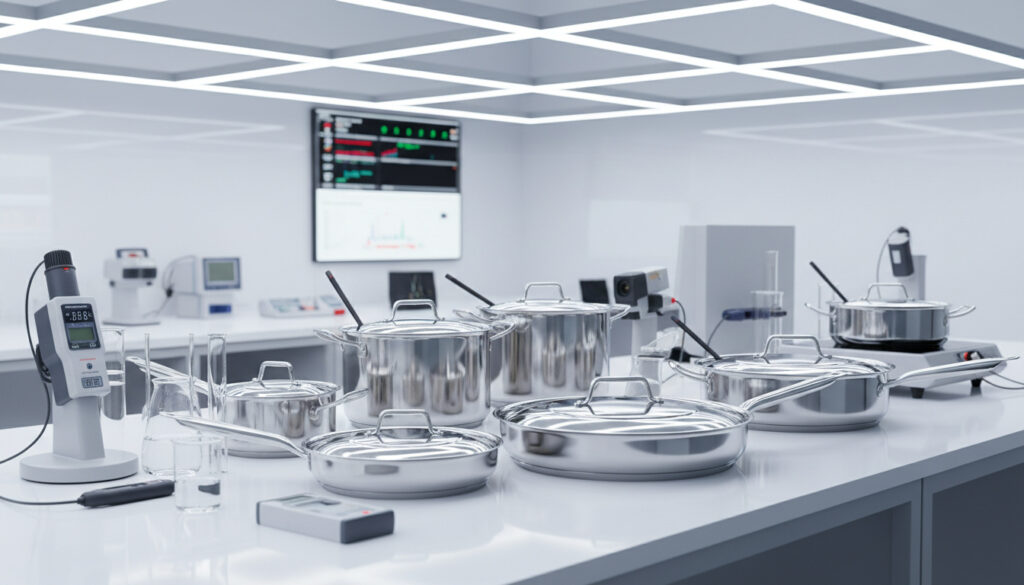
Stainless Steel Pan Set – Top Lab-Tested Picks
Selecting a stainless steel pan set requires balancing thermal performance against long-term durability. Modern tri-ply construction has transformed home cooking by delivering even heat distribution previously reserved for professional kitchens. Laboratory testing reveals significant differences between budget options and premium collections, with price points ranging from under two hundred dollars to over six hundred for professional-grade sets.
Independent evaluations consistently rank clad construction as the critical feature for consistent browning and responsive temperature control. Unlike coated alternatives, quality stainless steel withstands metal utensils, high-heat oven finishing, and aggressive cleaning without degradation. The current market offers induction-compatible options across all price tiers, eliminating the compatibility concerns that plagued earlier generations of cookware.
What Is the Best Stainless Steel Pan Set?
| Top Pick All-Clad D5 Brushed 5-Ply 10-Piece $600+ Excellent evenness, food release, and sturdy handles. Professional-grade durability across all cooking tasks. |
Budget Option The Cellar 11-Piece (Macy’s) $100-200 Induction-compatible with excellent heating scores. Includes trivet and four lids. Mediocre handle sturdiness. |
| Pro Grade Fissler Original-Profi 8-Piece Premium Top evenness and fast heating with cool, sturdy handles. Long-lasting build quality. |
Best for Induction Crate & Barrel EvenCook 10-Piece Mid-range Aces heating speed and simmering. One of the easiest stainless sets to clean. |
- Tri-ply cladding with aluminum cores delivers superior heat distribution and warp resistance.
- Top-rated sets command prices between $100 and $600 depending on construction layers and brand heritage.
- All leading models support induction cooking without adapter discs or modifications.
- Oven safety ratings typically exceed 500°F for versatile stovetop-to-oven cooking techniques.
- Handle construction varies significantly between brands, affecting long-term durability and heat resistance.
- Food release performance depends on proper preheating technique and oil quantity rather than coating.
- Five-ply construction offers enhanced insulation but tri-ply remains sufficient for most residential kitchens.
| Feature | Benefit | Example Sets |
|---|---|---|
| Tri-ply Cladding | Even heat distribution, warp resistance | Crate & Barrel EvenCook, Oxo Tri-Ply Mira |
| 5-ply Construction | Enhanced insulation, professional consistency | All-Clad D5 Brushed 10-Piece |
| Induction Base | Universal cooktop compatibility | Fissler Original-Profi, The Cellar |
| Oven-Safe to 500°F+ | Stovetop-to-oven versatility | All tested premium sets |
| Riveted Handles | Structural integrity under heavy load | All-Clad D5, Fissler Original-Profi |
| Stainless Interior | Chemical inertness, no coating degradation | All quality stainless collections |
What Should You Look for in a Stainless Steel Cookware Set?
What Is Tri-Ply Stainless Steel?
Tri-ply construction bonds an aluminum core between interior and exterior stainless steel layers. This configuration, detailed in culinary equipment standards, ensures rapid heat response while preventing warping. Five-ply designs add extra layers for improved heat retention but increase weight and cost significantly.
What Size Pans Come in a Typical Set?
Standard ten-piece configurations typically include two fry pans, two saucepans, one sauté pan, one stockpot, and matching lids. Eight-piece collections like the Fissler Original-Profi omit certain saucepans, while eleven-piece sets such as The Cellar include additional tools like trivets. Consider your household size and primary cooking techniques when evaluating piece counts.
Verify your cooktop type before purchasing. While all top-rated 2026 models feature induction-compatible bases, older or lower-tier sets may lack the magnetic properties required for induction efficiency.
Are Stainless Steel Pans Better Than Nonstick?
Stainless steel offers superior durability and longevity compared to coated alternatives. Unlike nonstick surfaces, which degrade at approximately 450°F and require replacement every three to five years, quality stainless steel withstands temperatures exceeding 500°F indefinitely. This resilience makes stainless ideal for searing proteins and building fond.
Nonstick coatings provide easier food release for eggs and low-fat cooking but contain compounds that degrade over time. Stainless steel requires adequate preheating and oil for similar release performance. Professional kitchens standardize on stainless for its chemical inertness and resistance to acidic ingredients like wine and tomatoes.
How Do You Clean and Maintain Stainless Steel Pans?
Daily Cleaning Techniques
Allow pans to cool before cleaning to prevent warping. For routine maintenance, hot water and mild detergent suffice. Address stuck food by deglazing with water while the pan remains warm, or soak briefly before washing. Independent testing confirms that Bar Keepers Friend or baking soda paste removes stubborn residue without damaging the finish when applied for under thirty seconds.
Long-Term Maintenance
Hand washing extends the lifespan of handles and rivets despite manufacturer dishwasher-safe claims. Avoid abrasive scouring pads that scratch brushed finishes. Periodically check handle tightness, as thermal expansion can loosen fasteners over years of use.
Avoid abrasive scrubbers on polished surfaces. While stainless steel resists scratching better than nonstick coatings, aggressive scouring permanently mars the aesthetic finish and can create microscopic grooves that trap food particles.
Bar Keepers Friend effectively removes discoloration and stuck food without damaging the cooking surface when used as directed. Apply with a soft sponge rather than steel wool to preserve the brushed exterior.
While marketed as dishwasher-safe, repeated automated cleaning accelerates handle degradation and potential rivet corrosion. Hand drying immediately after washing prevents water spots and maintains the luster of exterior surfaces.
How Has Stainless Steel Cookware Technology Evolved?
- 1950s: Introduction of bonded metal technology combining aluminum’s conductivity with steel’s durability.
- 1971: All-Clad Metalcrafters pioneers five-ply bonded cookware for residential markets in the United States.
- 1990s: Tri-ply construction becomes the standard for premium residential kitchens, replacing single-ply alternatives.
- 2005: Induction-compatible bases become standard features across major manufacturers.
- 2015: ASTM standards establish testing protocols for even heating and handle durability.
- 2026: Current models emphasize food release optimization and even heating, with Consumer Reports testing confirming significant performance improvements over decade-old designs.
What Investment Level Delivers Professional Results?
| Established Information | Information Requiring Clarification |
|---|---|
| Quality tri-ply sets range from $100 to $600+ depending on brand and construction layers | Exact lifespan varies significantly based on cooking frequency and maintenance discipline |
| Tri-ply construction represents the minimum standard for even heating | Specific resale value retention percentages for premium brands |
| All top 2026 models feature induction-compatible bases | Long-term health comparisons between stainless steel and ceramic alternatives |
| Five-ply construction offers superior heat retention for complex recipes | Precise temperature thresholds for individual brands’ handle materials |
Why Do Professional Kitchens Standardize on Stainless Steel?
Commercial kitchens favor stainless steel for its ability to develop fond, the caramelized bits that form the foundation of pan sauces. The material’s resistance to acidic ingredients allows chefs to deglaze with wine or tomatoes without metallic leaching. Unlike residential consumers, professionals prioritize durability over convenience, accepting the additional scrubbing required to maintain uncoated surfaces.
The material’s thermal properties support rapid temperature changes essential for sautéing and searing. Food safety regulations recognize stainless steel as inert for food contact, containing no PFAS or PFOA compounds found in some nonstick alternatives. This chemical stability ensures that purchasing decisions for Top flat sandals for women involve different durability criteria than selecting cookware, though both benefit from quality construction.
What Do Laboratory Tests Reveal About Performance?
Consumer Reports testing protocols evaluated heating evenness, speed, sautéing capability, simmering consistency, food release, cleaning difficulty, and handle durability. The All-Clad D5 Brushed 5-Ply 10-Piece set achieved top scores across all cooking tasks, demonstrating professional-grade durability alongside excellent food release properties.
Independent video analysis confirms the All-Clad D3 12-inch fry pan delivers quick heating and even browning comparable to more expensive five-ply alternatives, making it a frequent choice for professional home kitchens seeking individual pieces rather than complete sets.
Which Stainless Steel Pan Set Matches Your Cooking Needs?
The All-Clad D5 Brushed 5-Ply collection suits cooks prioritizing thermal consistency and long-term durability despite its premium price point. Budget-conscious buyers should consider The Cellar eleven-piece set, which delivers comparable heating performance with minor compromises in handle construction. Induction users can confidently select any top-rated 2026 model, as compatibility now spans all price tiers. When evaluating outdoor equipment like the Best pressure washers UK, consumers research pressure specifications similarly to how they should examine ply construction and heat distribution metrics for cookware.
Frequently Asked Questions
How much does a good stainless steel pan set cost?
Quality tri-ply sets range from approximately $100 for budget options like The Cellar to over $600 for professional-grade All-Clad D5 collections.
What is tri-ply stainless steel?
Tri-ply construction sandwiches an aluminum core between stainless steel layers, ensuring even heat distribution and warp resistance across the cooking surface.
Can stainless steel pans go in the oven?
Most premium stainless steel sets are oven-safe to 500°F or higher, though you should verify specific temperature limits for lids and handles.
What size pans come in a typical set?
A standard 10-piece set typically includes two fry pans, two saucepans, one sauté pan, one stockpot, and matching lids.
Are stainless steel pans safe for acidic foods?
Unlike reactive metals, quality stainless steel resists corrosion from tomatoes, wine, and citrus without leaching chemicals into food.
How long do stainless steel pans last?
With proper maintenance, quality stainless steel cookware lasts decades, outlasting nonstick alternatives which typically require replacement every three to five years.
Do stainless steel pans work on induction cooktops?
All top-rated 2026 models feature induction-compatible magnetic bases, though older or budget sets may lack this capability.
More related posts
 Why Does Gregory Porter Wear a Hat? The Story Behind It
 Rangers vs Aberdeen Lineups: Result, Context & Where to Watch
 Strictly Come Dancing Results – Week 5 Scores and Leaderboard
 Jon Batiste’s Health Condition, Wife, Children, and More
 Salmon Oil for Dogs – Benefits, Dosage and Safety
 Hotels Near Alton Towers: On-Site vs Budget vs Luxury
 Cardiff City vs Newport County: Stats, Prediction & History
 Best Pressure Washer UK – Top Models Tested 2024