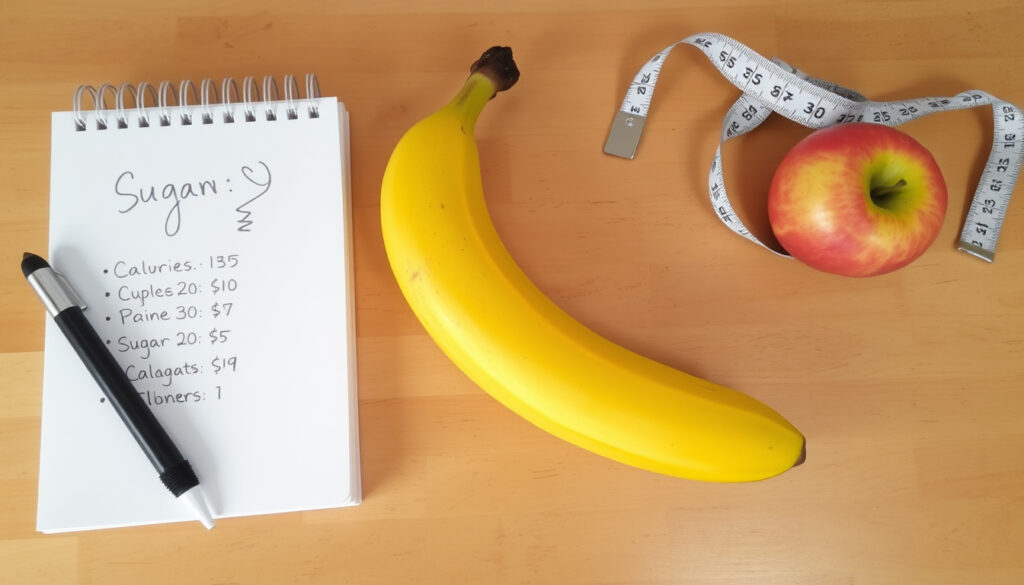
Calories in a Banana: Nutrition, Sugar & Comparisons
Few foods spark as much debate as the humble banana, and you’ve probably heard it called a perfect snack, a sugar bomb, or a diet saboteur. The truth? Bananas are one of the most nutrient-dense fruits around — and the numbers back that up.
Calories in one medium banana (7-8 inches): 105 ·
Calories per 100g: 89 ·
Carbohydrates: 27g ·
Natural sugar: 14g ·
Fiber: 3g ·
Protein: 1g
Quick snapshot
- Medium banana (7–8 in): ~105 calories (Healthline)
- Rich in potassium (422 mg) and vitamin B6 (Harvard T.H. Chan School of Public Health)
- Low glycemic index: 51 for ripe bananas (WebMD)
- Effectiveness of the “banana trick” for constipation is anecdotal only
- Whether doctors universally advise against bananas for all diabetics (individualized)
- Direct impact of banana consumption on belly fat (linked to overall diet)
- Exact potassium content varies by banana size and ripeness
- No urgent timeline — bananas are a year-round fruit with stable nutrient profile (Healthline)
- Ripeness changes carb composition over 5–7 days (Healthline)
- Ongoing research on resistant starch in green bananas and gut health
- Growing interest in banana flour as a gluten-free alternative
Here is a summary of the key nutrients in a medium banana.
| Calories | 105 |
| Carbohydrates | 27g |
| Sugar | 14g |
| Fiber | 3g |
| Protein | 1g |
| Potassium | 422mg |
How many calories are in one average banana?
The answer depends on size, but the standard “medium” banana — about 7 to 8 inches long — clocks in at 105 calories, according to Healthline (a trusted health publisher). Harvard T.H. Chan School of Public Health (a top-tier nutrition research institution) reports a similar figure of 110 calories for the same size.
Calories by banana size (small, medium, large)
- Extra-small (under 6 inches): ~72 calories (Noom)
- Small (6–7 inches): ~90 calories (Noom)
- Medium (7–8 inches): 105–110 calories (Healthline, Harvard)
- Large (8–9 inches): ~121 calories (Noom)
Calories in banana with peanut butter
Pairing a medium banana with 1 tablespoon of peanut butter adds about 95 calories and 4 g of protein, bringing the total to around 200 calories. Hers (a women’s health platform) notes that this combo boosts satiety and helps stabilize blood sugar.
The extra calories buy you sustained fullness — but if you’re watching calorie density, skip the peanut butter. The banana alone already delivers 3 g of fiber and natural energy.
The implication: bananas offer a flexible calorie option that fits most diets.
Is 1 banana a day too much sugar?
A medium banana contains about 14 g of sugar — all natural. The American Heart Association recommends limiting added sugar to 25 g per day for women and 36 g for men (AHA scientific statement). Natural sugars in whole fruit don’t count toward that limit.
Natural vs added sugars
The sugar in bananas is bundled with fiber (3 g per medium banana), which slows digestion and prevents blood sugar spikes. Harvard’s Nutrition Source emphasizes that the body processes fruit sugar differently from added sugars in soda or candy.
Daily sugar recommendations
One banana provides 14 g of sugar — within the daily allowance of natural sugars for most people. Even two bananas (28 g of sugar) remain well below the added-sugar cap. For context, a 12-ounce soda contains about 39 g of sugar, mostly added.
Bananas are not “too high” in sugar for the general population. The real worry is added sugars from processed foods — not whole fruit. A single banana is a harmless choice for most healthy adults.
What this means: fruit sugar, unlike added sugar, comes with fiber and nutrients that mitigate blood sugar impact.
Which is healthier, a banana or an egg?
This comparison pits a carbohydrate-rich fruit against a protein powerhouse. The answer depends on what you need from your meal.
One medium banana vs. one large egg: a quick nutritional trade-off table.
| Nutrient | Medium banana (7–8 in) | Large egg (50 g) |
|---|---|---|
| Calories | 105 | 78 |
| Protein | 1.3 g | 6 g |
| Carbohydrates | 27 g | 1 g |
| Fiber | 3.1 g | 0 g |
| Fat | 0.4 g | 5 g |
| Potassium | 422 mg | 70 mg |
| Vitamin B12 | 0 µg | 0.6 µg |
| Vitamin C | 10.3 mg | 0 mg |
Sources: banana data from Healthline and Harvard; egg data from Ethical Nutrition (tier-3 source) and USDA standard reference.
Health benefits of each
- Banana: Rich in potassium (for heart health), vitamin B6, vitamin C, and fiber. Supports digestion and provides quick energy.
- Egg: Complete protein with all essential amino acids, plus vitamin B12, vitamin D, and choline. Supports muscle repair and brain function.
Neither is “better” overall — they serve different roles. For breakfast satiety, the egg’s protein keeps you full longer. For pre-workout energy, the banana’s carbs are ideal.
The pattern: each food excels in different nutritional dimensions.
Are bananas okay for weight loss?
Yes — but context matters. Bananas are relatively low in calories (105 per medium fruit) and high in fiber (3 g), which promotes fullness. Noom (a behavior-change weight-loss platform) argues that bananas can support weight loss because they are nutrient-dense and satisfy sweet cravings.
Bananas as a snack
One medium banana is a 105-calorie snack that provides natural sweetness. Replacing a 200-calorie candy bar with a banana saves nearly 100 calories while adding fiber and potassium.
Fiber and satiety
The 3 grams of fiber in a banana slow stomach emptying, keeping you full longer. Pairing with a protein source — like a hard-boiled egg or a spoonful of peanut butter — can extend satiety further, as noted by Hers.
Weight loss dieters can absolutely eat bananas — just watch portion size if you’re on a low-carb plan. One banana fits a 1,500–1,800 calorie diet easily and delivers nutrients that processed snacks lack.
The catch: they work best as a swap, not an addition.
Why do some doctors say not to eat bananas?
The caution usually comes from blood sugar concerns — not general health warnings. Bananas are higher in carbohydrates (27 g) than many fruits, which can affect glucose levels in people with diabetes or insulin resistance.
Blood sugar concerns
Harvard’s Nutrition Source notes that ripe bananas have a glycemic index of 51 (low), and slightly under-ripe bananas score even lower at 42. Still, some doctors advise diabetics to limit banana intake or choose smaller, greener bananas to moderate blood sugar response.
The banana trick for bowel movements
The “banana trick” — eating a ripe banana on an empty stomach to stimulate a bowel movement — has anecdotal support but lacks rigorous clinical trials. WebMD (a mainstream health information site) describes bananas as a good source of prebiotic fiber that can support regularity, but specific timing claims remain unproven.
For the vast majority, bananas are healthy. The “doctor warning” applies mainly to diabetics who need to manage carb intake — not to the general population. Don’t let fringe cautions scare you off a perfectly good fruit.
The implication: general warnings are often misplaced for non-diabetic individuals.
Banana vs. Egg: Pros and Cons for Weight Management
Upsides of bananas
- Low-calorie density (89 kcal per 100 g)
- Provides fiber for satiety
- Natural sweetness curbs processed sugar cravings
- Rich in potassium and vitamin B6
Downsides of bananas
- Higher in carbs — less suitable for low-carb diets
- Lower protein content — less satiating per calorie than eggs
- Ripeness affects sugar content rapidly
- Can be over-consumed when calorie counting is strict
What this means: the choice between banana and egg depends on your macronutrient priorities.
Confirmed facts vs. What’s still unclear
Confirmed facts
- A medium banana contains ~105 calories (Healthline).
- Bananas are a good source of potassium (422 mg) and vitamin B6 (Harvard).
- Natural sugar in bananas comes with fiber that slows absorption (Harvard).
- One banana a day is safe for most people (AHA).
What’s unclear
- The effectiveness of the “banana trick” for constipation is anecdotal.
- Whether doctors universally advise against bananas for all diabetics (individualized advice).
- The exact impact of banana consumption on belly fat (linked to overall diet).
- Exact potassium content varies by banana size and ripeness.
These points frame the current evidence landscape.
Expert perspectives on bananas
“Bananas are a great source of potassium, vitamin B6, fiber, and carbohydrates, making them a solid choice for a pre-workout snack or a midday energy boost.”
— Harvard T.H. Chan School of Public Health, Nutrition Source
“One medium banana contains about 105 calories, 27 grams of carbs, and 14 grams of sugar — mostly natural sugars that are easy to digest and use for energy.”
— Healthline
“The American Heart Association recommends limiting added sugars to no more than 25 grams per day for women and 36 grams for men. Whole fruit sugars are not included in this limit.”
— American Heart Association
What this means for your diet
Bananas are far from the dietary villain some make them out to be. They deliver real nutrients — potassium, fiber, vitamin B6 — at a reasonable calorie cost. The primary concern (blood sugar spikes) applies mainly to people with diabetes, not to the general population. For anyone managing weight, a medium banana is a smart swap for processed sweets and a convenient source of pre-workout energy. The comparison with eggs shows that both foods have a place: bananas for quick carbs and micronutrients, eggs for lasting protein and fat. The trade-off is clear — choose based on your immediate need.
For the average person trying to eat well, the decision is simple: eat the banana. Pair it with a protein if you want longer satiety, and enjoy it without guilt. For diabetics or those on strict low-carb plans, opt for smaller, greener bananas and monitor portions. But don’t let outdated myths keep you from one of nature’s best packaged snacks.
For the health-conscious eater, the implication is clear: include bananas in your diet, or miss out on an affordable, nutrient-dense whole food that outshines most processed alternatives.
Related reading: How to Get Rid of Belly Fat: Science-Backed Tips · Best Workout Routines for Beginners: 3-Day Full-Body Plans
For a deeper look at specific figures, you can read more about the calories in a banana to understand how size affects the total count.
Frequently asked questions
How many carbs are in a banana?
A medium banana has about 27 g of carbohydrates, including 14 g of natural sugar and 3 g of fiber (Healthline).
Can bananas cause weight gain?
No single food causes weight gain by itself. Bananas are low in calorie density and high in fiber. Harvard’s Nutrition Source notes that cohort studies associated banana consumption with less weight gain over time.
What is the healthiest fruit?
There is no single healthiest fruit. Bananas rank high for potassium and vitamin B6, while berries are top for antioxidants, and citrus for vitamin C. Variety is key.
How many calories in a banana compared to an apple?
A medium banana has about 105 calories; a medium apple has about 95 calories. Both are low-calorie whole fruits with fiber.
Are bananas good for constipation?
Yes — the fiber in bananas (especially pectin) can help regulate bowel movements. Riper bananas are easier to digest, while greener bananas contain resistant starch that also supports gut health (WebMD).
What is the banana trick for bowel movements?
The “banana trick” involves eating a ripe banana on an empty stomach to stimulate a bowel movement. Evidence is anecdotal, not clinically proven.
How does banana sugar affect blood sugar?
Bananas have a low glycemic index (42–51 depending on ripeness). The fiber slows sugar absorption, so blood sugar spikes are minimal for most people (Harvard).
More related posts
 DHS Revokes Humanitarian Parole: CHNV Program Terminated
 Cast of Why Didn’t They Ask Evans?: 2022, 2009, 1980
 What Does 6 7 Mean Slang – TikTok Origin, Gesture and Gen Z Guide
 London Things to Do – Top Attractions Free Museums Itineraries
 Julia Hartley-Brewer – Age, Career, Family and Views
 Wednesday Addams: History, Season 2 & Jenna Ortega Exit
 BBC Sounds Radio 4 – Complete UK and Abroad Guide
 5 11 in cm: Exact Conversion, Comparisons and Height Facts